
A comfortable room often feels balanced before it looks perfectly styled. Natural ways to humidify air can help create that feeling through simple household choices. The point is not to chase a complicated wellness routine. It is to notice how daily habits influence the atmosphere around you. Warm showers, indoor plants, cooking, and open containers can all add subtle moisture. Each option works best when it fits your household naturally. A home should feel easier to maintain, not more demanding. Start with the rooms that feel driest during your normal routine. Then choose one small change that feels realistic. The most useful approach is the one you will actually continue.
Start by looking at the activities already happening in your home. Cooking, showering, and laundry all change the air in small ways. Natural ways to humidify air work best when they build on those existing patterns. After a shower, leave the bathroom door open briefly if the space allows. Simmering a pot of water while cooking can add warmth and moisture to the kitchen. Drying laundry indoors may also shift the feeling of a room, depending on ventilation. These choices should always stay practical and safe for your household. Use them as gentle additions rather than the only solution. A thoughtful home moisture routine begins with what already fits your day. When the habits feel familiar, they are easier to repeat without effort.
Living rooms can feel noticeably dry when heat runs for long stretches. Begin with materials that bring softness to both the room and its daily rhythm. Natural ways to humidify air may include grouping leafy plants near bright, indirect light. Plants do not need to fill every shelf to make the space feel more alive. A few well-chosen varieties can create a relaxed visual rhythm. Use trays beneath pots to protect furniture and simplify watering. Pair greenery with open bowls of water placed safely away from pets and small children. Consider natural humidity support as one part of a broader comfort plan. Keep the room uncluttered enough that every surface remains easy to clean. An inviting environment works best when it feels both beautiful and manageable.
Comfort comes from consistency, not from trying every idea at once. Natural ways to humidify air become easier when you choose one or two habits for each room. Refill plant watering cans during a weekly reset instead of waiting until leaves look stressed. Use the kitchen’s warmth during cooking as a reminder to assess the room’s atmosphere. Open windows briefly when conditions feel stale, then close them when temperatures drop. This creates a more responsive rhythm through the season. A small humidifier may still be useful when natural methods do not provide enough support. Explore smart humidifier choices if you want an additional layer of control. There is no need to choose between nature and practical tools. A balanced setup often uses both in ways that feel simple.
Plants can do more than decorate a shelf or fill an empty corner. They introduce color, shape, and a gentler sense of movement into quiet rooms. Choose varieties that suit your available light and your willingness to water regularly. Place larger plants on the floor to soften corners near windows or seating areas. Smaller plants can make a desk or bedside table feel more considered. Do not buy more plants than your schedule can support. A few healthy choices look better than an overfilled arrangement. Use ceramic or woven planters that complement the rest of your home. Keep leaves clean so they stay attractive and easy to inspect. Greenery becomes more useful when it feels like part of your everyday space.
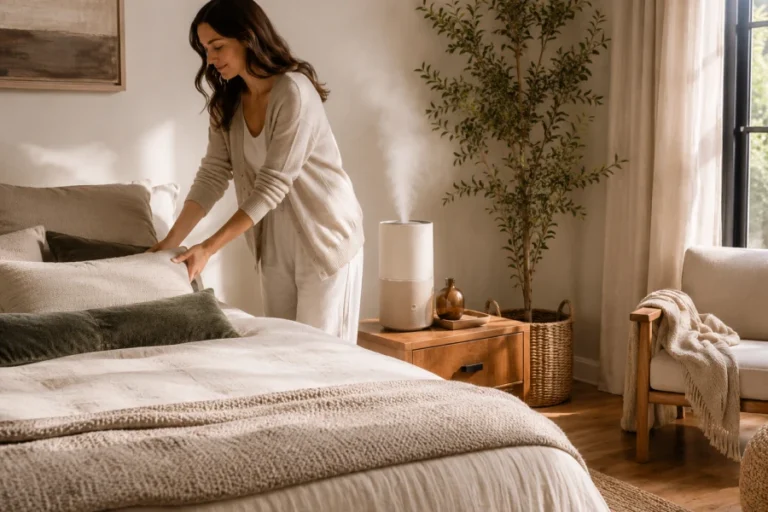
Natural methods create atmosphere, while a humidifier may offer a more dependable boost when needed. Natural ways to humidify air do not have to compete with a helpful device. Think of them as the softer layer of a practical indoor routine. Plants add life, cooking adds warmth, and a humidifier can support more targeted comfort. Keep the device clean and positioned according to its instructions. Use it when dry conditions feel persistent rather than occasionally noticeable. Add dry air solutions that suit the size and use of each room. A bedroom may benefit from different choices than a bright kitchen or sunny office. The goal is not a perfect formula. It is a home that responds intelligently to changing conditions.
Indoor air care should not make a room look busy or overly managed. Choose containers, planters, and accessories that fit the existing palette. Neutral ceramics, glass vessels, and wood trays help everyday items feel intentional. Keep water-related supplies in one easy-to-reach location. That reduces clutter and makes regular care more likely. Avoid stacking too many objects around windowsills and radiators. Open surfaces make it easier to clean and notice small changes. A simple tray can organize a plant mister, cloth, and watering can discreetly. Leave room for light to move through the space. Calm surroundings make small rituals feel more restorative. The best home systems quietly improve both appearance and function.
Simple choices tend to last because they are woven into the life you already have. Natural ways to humidify air encourage you to notice the rhythms of your rooms. You may become more aware of sunlight, fabric, warmth, and daily activity. That awareness helps you make better choices without adding pressure. Start with one room that feels dry or less inviting. Add one practical habit and give it time to become familiar. Consider what works before making another change. A thoughtful home does not need endless products to feel supportive. It needs routines that respect your time and surroundings. Small, steady adjustments can make ordinary spaces feel noticeably more comfortable.



Leave a comment