Indoor comfort is often shaped by details that stay invisible until they become distracting. Home humidifier benefits become especially noticeable when heated or cooled rooms begin feeling dry. Skin may feel tight, wooden furniture can seem less forgiving, and bedding may lose its soft appeal. A room does not need to feel uncomfortable before you consider changing its atmosphere. Instead, notice the small signs that your home needs more balance. Dry air can make mornings feel harsher than they need to be. It can also make a carefully styled room feel less welcoming. A thoughtful approach starts with your favorite spaces, not every room at once. Small improvements often create the most reliable routines. The goal is a home that feels calmer from the first breath.
Comfort rarely depends on one dramatic home upgrade. It usually grows from details that make a room feel gentler throughout the day. Home humidifier benefits can support that feeling when indoor air becomes noticeably dry. Begin by paying attention to bedrooms, workspaces, and living areas where people spend the most time. These rooms shape how a home feels during quiet mornings and busy evenings. A humidifier can become part of a comfortable home climate without changing the look of your space. Choose a placement that feels practical rather than overly visible. Keep cords, water access, and nearby surfaces in mind before deciding on a permanent location. A small adjustment works best when it fits naturally into the room. When the setup feels easy, it is more likely to become a lasting habit.
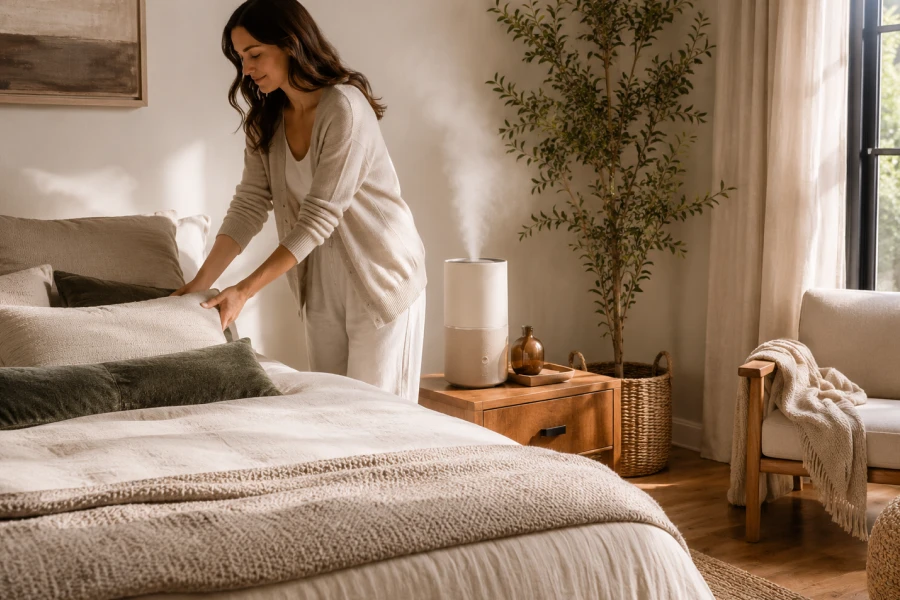
Bedrooms often reveal dry air first because rest depends on a comfortable, settled environment. Place your device on a stable surface away from direct bedding and electronics. Keep enough open space around it for air to move gently through the room. Home humidifier benefits feel more intentional when the device supports an existing bedtime routine. Pair it with softer lighting, fresh linens, and a quick evening reset. Consider bedroom humidity ideas that match the scale of your room. A compact option may suit a nightstand, while a larger room may need another placement. Refill water before bedtime rather than during a tired late-night moment. Clean the tank according to its instructions so the routine stays pleasant. Consistency gives the room a more polished sense of care.
A humidifier should feel like a useful part of the room, not another object demanding attention. Start with the manufacturer’s instructions, especially around cleaning and recommended room size. Use fresh water and empty the tank when it will not be used regularly. Keep nearby wood, books, and textiles from becoming damp. Home humidifier benefits are strongest when moisture stays balanced rather than excessive. A simple hygrometer can help you understand how the room changes over time. You may notice that one season calls for more attention than another. This is where balanced humidity habits become more useful than guesswork. Make the routine small enough to complete without delay. A clean, well-placed device can quietly support a room’s everyday comfort.
Air quality routines do not need to look clinical or overly technical. They can fit easily into a warm, lived-in home. Choose a finish that works with your furniture, ceramics, and textiles. A neutral device can blend into a shelf, side table, or low cabinet. Add plants, soft throws, and natural materials to reinforce the room’s calm mood. The humidifier does not need to become the visual focus. Let it support the feeling you already want to create. An uncluttered surface also makes refilling and cleaning easier. Keep a small tray nearby for daily essentials if that simplifies the process. Good design is often about making helpful things easy to use. A composed room encourages better habits without needing constant reminders.
Indoor air often feels different as outdoor temperatures and heating patterns shift. That is why seasonal awareness matters more than using the same routine year-round. Home humidifier benefits can make a noticeable difference when windows stay closed for longer periods. Review your placement when you switch bedding, rearrange furniture, or begin running heat more often. Those moments already signal a change in how the home functions. Add seasonal air care to your broader home reset rather than treating it as a separate task. Wipe exterior surfaces, inspect the tank, and check the room’s comfort level. You may need less moisture than expected during milder weeks. Flexible routines help you respond to real conditions instead of a fixed calendar. The result is a more thoughtful relationship with every room.
Regular care protects both the device and the sense of ease it brings. Empty old water instead of letting it sit between uses. Rinse removable parts and follow cleaning directions at the suggested intervals. Keep a clean cloth nearby for quick exterior touch-ups. Make refilling part of another steady habit, such as preparing tea or drawing curtains. This keeps the task from feeling like an extra responsibility. Avoid overcomplicating the system with too many products or accessories. A calm routine usually uses fewer steps, not more. Pay attention to how the room feels after several days of consistent use. Then adjust placement, timing, or frequency as needed. Small maintenance creates reliable comfort without turning air care into a project.
The best home routines are the ones that improve daily life without demanding too much attention. Home humidifier benefits fit that philosophy because they can support a more comfortable atmosphere through quiet consistency. Begin with one room and one realistic habit. Let the routine prove its value before expanding it elsewhere. Keep the device clean, the placement practical, and the room visually calm. Build around your actual schedule rather than an idealized one. A more inviting home often starts with simple decisions repeated well. Over time, those choices can make spaces feel softer and easier to enjoy. The effect is subtle, but the experience can feel deeply personal. Your home becomes a place that supports rest in more ways than one.




Leave a comment